


LinkedIn’s research team doesn’t use language like “defining era” lightly. When the platform’s economists call 2026 a turning point for small business AI adoption, that’s a signal — not a trend piece. The question isn’t whether AI belongs in a small business.
The question is what it’s actually supposed to do when it gets there, and which specific systems create the leverage that separates high-performing operations from ones still running on manual effort and good intentions.
Why LinkedIn’s Data Matters More Than the Hype
LinkedIn’s Director of Research Sharat Raghavan put it plainly: AI has moved from a tool to a strategic asset for small businesses aiming to stay resilient and grow. The report found that small business leaders believe AI will help them compete and punch above their weight — not someday, but now.
That language is deliberate. Punching above your weight means a business operates with the leverage of a team twice its size. Systems run when the owner isn’t watching. Leads get captured that used to go cold. Follow-up happens while the owner is on a job site. Revenue flows from channels that previously required a dedicated employee to manage.
What the LinkedIn report doesn’t spell out is which systems create that leverage. That’s where most small business owners get stuck — inspired by the data, unsure of the implementation. They know AI is supposed to matter. They’re not sure where it plugs into Monday morning.
Inspired isn’t a strategy. A connected operational system is. The distance between “AI is strategic” and “here’s our AI infrastructure” is exactly where revenue leaks out — quietly, consistently, and at a scale most owners don’t realize until they run the numbers.
What the Operational Version Actually Looks Like
Picture a home services business owner — roofing, HVAC, landscaping, it doesn’t matter. They’re running a solid operation. Good reviews. Referrals coming in. They’ve even started running ads to pull in new traffic. Business is moving.
But here’s what’s happening behind the scenes on any given Tuesday.
Forty-three people visited the website that day. A handful filled out the contact form. The rest — the ones who spent eight minutes on the services page, clicked to pricing, and then closed the tab — are gone. No name. No number. No record they were ever there. The ad budget paid to get them there. The business got nothing in return. This is the visibility problem that Ai Detect is built to solve. It identifies anonymous website visitors in real time — surfacing names, contact information, and the exact pages they visited — so that a qualified prospect who didn’t fill out a form isn’t lost forever. Over a third of website visitors can be identified this way. That’s a significant lead pool that most businesses don’t know they have.
Now say those visitors do get identified. The data lands in a spreadsheet. Someone on the team is supposed to move it into the CRM — but they’re in the field, or handling customer calls, or it’s 6pm and they’ll get to it tomorrow. Under that model, research shows that nearly three quarters of identified leads never actually make it into a CRM. They sit in a sheet, go stale, and quietly disappear. Ai Sync removes that handoff entirely. The moment a lead is identified, it’s pushed automatically into whichever CRM the business already uses — HubSpot, Jobber, Salesforce, GoHighLevel, and over a hundred others. No manual step. No delay. No one has to remember to do it.
Getting the lead into the CRM is only half the battle. The other half is what happens in the next hour. A prospect who visited a roofing company’s website at 9pm isn’t sitting by the phone waiting. By morning, they’ve called two other companies. The businesses that respond within minutes — not days — are the ones that win that job. Ai Nurture handles that window automatically, sending a sequence of emails, texts, and voicemail drops within 15 minutes of a lead being identified. The messaging is customized to what the visitor actually looked at — someone on the pricing page gets a different message than someone who read a project gallery. Clients using this system consistently see close rates climb significantly compared to manual follow-up, and their teams stop spending hours chasing people who never respond.
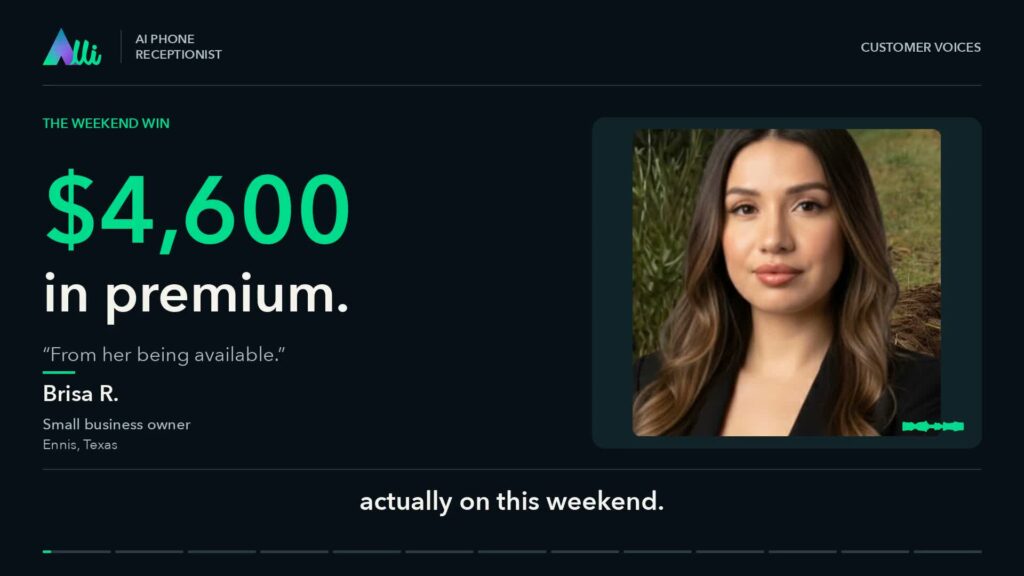
Meanwhile, the phone is ringing. Not always at 9am on a weekday — often at 7pm, or Saturday morning, or right in the middle of a job walkthrough when the owner can’t pick up. Every missed call in a service business is a lead that either waits or moves on. Most move on. Ai Voice answers every inbound call regardless of time, walks the caller through a qualification script built around the business’s actual services, captures the details that matter — project scope, timeline, how they heard about the company — and sends a full summary to the owner’s inbox. One business owner using this system described it simply: she received a call summary while at the arcade with her kids, from a lead Ai Voice had handled while she was completely unavailable. That’s what 24/7 coverage actually looks like.
At the end of the week, the owner sits down to figure out what’s working. Without a unified view, that means pulling a report from the ad platform, another from the CRM, checking the call log separately, and trying to connect dots that don’t naturally connect. Most owners skip this entirely and go on gut feel. Ai Insights consolidates that data into a single dashboard — which campaigns drove identified visitors, which follow-up sequences converted, which calls turned into booked jobs — with growth recommendations grounded in actual performance rather than instinct.
That’s the full loop inside Carroll Media’s Alli platform. It’s not six separate tools that happen to exist in the same ecosystem. It’s one connected system where each piece hands off to the next — automatically, around the clock, whether the owner is on a job site, in a meeting, or asleep.
The Businesses Winning Aren’t Spending More. They’re Spending Smarter.
There’s a version of this conversation that turns into a debate about software costs. That’s the wrong frame.
The real question isn’t what an AI platform costs. It’s what the current setup is costing — in leads that were never captured, calls that went to voicemail and never got returned, follow-ups that were supposed to happen on Friday and got pushed to Monday and then forgotten entirely.
A traditional receptionist covers business hours. Takes sick days. Goes on vacation. Misses calls during lunch. Has a bad day and leaves a prospect feeling unimpressed. That’s not a criticism — it’s just the reality of relying on a single human to be the front line of every inbound opportunity. The math on missed calls alone is significant: in most service businesses, a single missed job covers weeks of infrastructure costs.
Manual CRM entry carries its own hidden cost. Every time a person transcribes a lead from one system to another, there’s a chance for an error, a delay, or a lead that just doesn’t make it. Multiply that across a week of inbound activity and the number of leads silently lost to process friction is higher than most owners realize — until they implement something automated and suddenly see how full the pipeline actually is.
The same logic applies to follow-up. A business that relies on a salesperson to manually reach out to every new lead is capping its own capacity at whatever that person can physically accomplish in a workday. Automated follow-up doesn’t replace that salesperson — it makes sure no lead goes cold before the salesperson ever has a chance to get to it.
The businesses that are outperforming their markets in 2026 didn’t necessarily out-invest their competitors. They built systems that work when their team isn’t. That’s a fundamentally different operating model — and it’s available to any service business willing to implement it.
The Businesses That Won’t Benefit From This Shift
Not every business will close the gap in 2026. And honestly, the ones that won’t aren’t usually missing resources — they’re missing awareness of where the actual problems are.
The most common issue is manual lead routing. Someone on the team copies form submissions into a CRM by hand. It sounds manageable until that person is slammed, sick, or just running behind — and suddenly there’s a backlog of leads sitting in an inbox that nobody has touched in three days. By the time someone follows up, the prospect has already hired someone else. It’s not a people problem. It’s a systems problem.
After-hours coverage is another one. A service business that stops answering calls at 5pm is effectively handing part of its pipeline to competitors who don’t. The prospect who called at 6:30pm about a flooded basement isn’t waiting until morning. They’re calling down the list until someone picks up. The business that answers wins the job — not because they were better, but because they were available.
Then there’s the website traffic problem that most owners don’t know they have. They check the monthly visitor count in Google Analytics and feel good about the number. But a visitor count isn’t a pipeline. Knowing that 800 people visited the site last month doesn’t help if the business has no idea who they were, what they were looking for, or how to reach them. The businesses growing in 2026 have solved this. They know who visited, what page caught their attention, and they have a follow-up ready before that person has had time to call a competitor.
Finally, disconnected reporting keeps a lot of owners stuck making decisions by feel. When ad performance lives in one platform, CRM data in another, and call logs somewhere else entirely, there’s no clean line between marketing spend and closed revenue. The result is budget cuts in the wrong places and continued investment in things that aren’t actually working. A unified view changes that conversation entirely.
The Operational Shift That Separates This Year’s Winners
The LinkedIn report’s core finding is straightforward: the small businesses that win in 2026 are the ones that use AI to handle the infrastructure — so their people can focus on the work that actually requires a human.
That division of labor sounds simple. In practice, it’s a meaningful shift in how the business operates day to day.
Here’s what it looks like when it’s working. A lead lands on the website at 10pm. Within minutes, their contact information is identified, pushed into the CRM, and they’re in a follow-up sequence. By 10:15pm they’ve received a text. If they call back, someone answers. The next morning, the owner opens their inbox and finds a clear summary — who came in, what they looked at, which ones responded, which calls came in after hours, and what appointments are on the calendar.
The owner didn’t do any of that. The system did. And the owner gets to start the day actually running the business instead of catching up on the night before.
That’s not a small thing. That’s the difference between a business that’s always reacting and one that’s consistently ahead. The technology to build that kind of operation exists right now, it’s not expensive relative to what it replaces, and the businesses that implement it this year will have a structural advantage that compounds over time.
This is what LinkedIn’s economists mean when they talk about small businesses punching above their weight. Not AI as a buzzword. AI as the operating system running quietly in the background while the owner focuses on what they actually built their business to do.
The businesses that look back at 2026 as a turning point aren’t the ones that read the data and nodded. They’re the ones that looked at a specific breakdown in their operation — a missed call, a visitor who never got followed up, a lead that went cold in a spreadsheet — and decided to fix it.
Alli is built for exactly that. One platform. Six connected Power-Ups. A system that runs whether or not the owner is in the building.
See what it looks like for your business with a FREE demo now.