

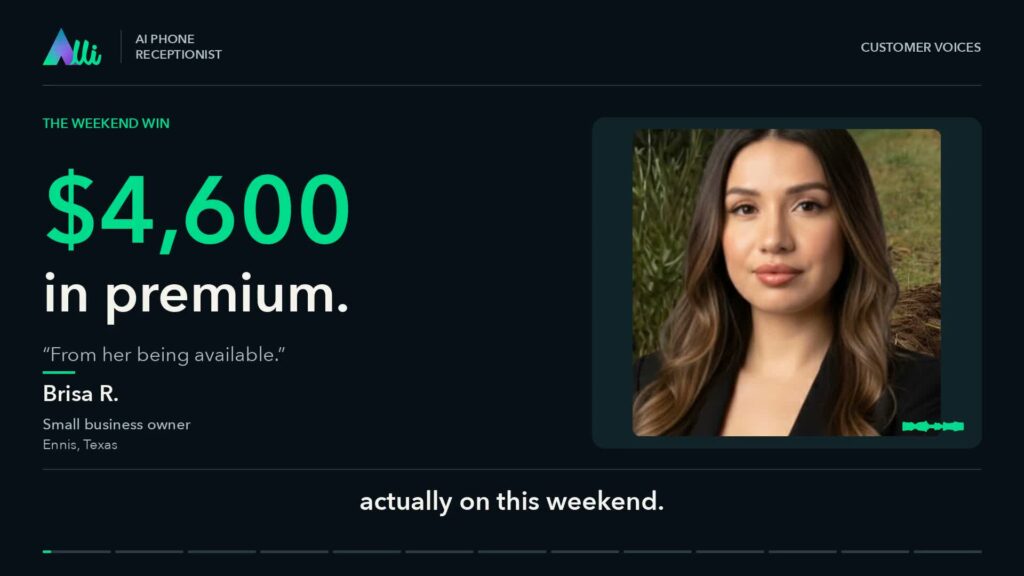


The Most Expensive Hours of Your Business
Most business owners think they know when their business is open and closed.
Office hours are posted. Phones roll to voicemail. Messages wait until morning. Everything feels reasonable and normal from the inside.
But customers don’t think in office hours.
They reach out when the problem feels urgent. When they finally have a moment. When they’re sitting on the couch at night, scrolling through Google. When it’s Saturday morning and they have time to research. When they’re between meetings and decide to make the call they’ve been putting off.
Those moments don’t align neatly with a 9–5 schedule.
And that’s where most businesses quietly lose money.
After-hours leads don’t announce themselves. They don’t show up in reports as “lost opportunities.” They don’t send follow-up emails explaining why they chose someone else. They simply vanish.
From the business owner’s perspective, nothing feels broken. The phones were off. The office was closed. The team was unavailable. Everything worked the way it was supposed to.
From the customer’s perspective, the business didn’t exist in that moment.
This is the gap most small businesses never see. Not because they’re careless, but because it happens when no one is watching. Nights. Weekends. Busy moments. Peak hours when everyone is tied up.
These aren’t dead hours. They’re decision hours.
And when a customer reaches out and hears silence, they don’t wait patiently for tomorrow. They keep moving. They click the next listing. They call the next business. They choose whoever answers first.
This blog isn’t about working longer hours or being available 24/7. It’s about understanding what actually happens to leads when your business goes quiet — and why after-hours may be costing you far more than you realize.
The Myth of “We’ll Call Them Back”
For decades, the standard response to a missed call was simple: call them back.
It made sense in a time when people expected delays, checked voicemail, and waited for return calls. Businesses built entire workflows around this assumption. Miss the call now, follow up later, and pick up where you left off.
That assumption no longer holds.
Today, “we’ll call them back” is one of the most expensive myths in small business.
When a customer reaches out, they’re usually acting in a narrow window of intent. Something triggered the decision to call. A problem became urgent. A need crossed a threshold. They finally made the time.
That window closes quickly.
If the call goes unanswered, most customers don’t leave a voicemail. They don’t wait by the phone. They don’t plan to try again later. They hang up and move on to the next option.
This isn’t impatience. It’s efficiency.
Customers know they have choices. They assume the business that answers first is the one best positioned to help them. Silence doesn’t feel neutral — it feels like a signal to keep looking.
From the business side, missed calls rarely trigger alarm. Phones ring all day. Not every call converts. It feels reasonable to assume a callback will solve the problem.
But here’s the part most business owners never see: by the time you call back, the decision has often already been made.
The customer didn’t just call you. They likely called two or three businesses in a row. The one that answered shaped the experience. The others didn’t get a second chance.
This is especially true after hours.
Late at night, on weekends, or during busy stretches, customers aren’t casually browsing. They’re trying to solve something. They’re not looking to leave messages. They’re looking for confirmation that someone is there.
When they don’t get it, momentum dies instantly.
Internally, this loss is invisible. There’s no error message. No red flag. No notification that says, “This lead would have converted if someone answered.” The only signal is what happens later — fewer booked appointments, fewer conversions, slower growth.
Business owners respond by pushing harder. They increase marketing. They spend more on ads. They work longer hours. They assume the issue is volume.
But the real problem isn’t how many leads come in. It’s how many disappear before anyone gets the chance to respond.
Callbacks feel responsible. They feel professional. But in a world where customers expect immediate acknowledgment, callbacks often come too late to matter.
After-hours isn’t downtime anymore. It’s decision time.
And every unanswered call during those hours is a decision being made without you in the conversation.
Where After-Hours Leads Actually Go
When a customer reaches out to your business after hours and doesn’t get an answer, it’s easy to assume the opportunity is still there. The voicemail exists. The missed call shows up in the log. The form submission sits in the inbox waiting for morning.
From the business side, nothing feels urgent.
From the customer’s side, the decision is already in motion.
Most after-hours leads don’t go nowhere. They go somewhere else.
Customers rarely stop their search because one business didn’t answer. They keep moving. They open another tab. They click the next listing. They dial the next number. The moment they don’t hear a human voice or receive acknowledgment, their focus shifts.
This is especially true after hours because of context. Late-night and weekend searches aren’t casual browsing sessions. They happen when someone finally has time, when something feels pressing, or when they want to resolve an issue before it becomes a bigger problem. In those moments, patience is low and urgency is high.
When a business goes silent during that window, customers don’t interpret it as “they’re closed.” They interpret it as “they’re not available.”
Availability is what customers are choosing.
Most business owners underestimate how quickly these decisions happen. A customer doesn’t sit with a voicemail and wait for a callback. They move on immediately because they assume the next business might answer. And very often, that next business does.
This is how after-hours leads quietly convert somewhere else without ever showing up in your numbers.
By the time the business responds the next morning, the conversation is already over. The customer doesn’t always respond to the callback. Not because they’re rude or disinterested, but because the problem was already solved. Someone else picked up. Someone else responded. Someone else made it easy.
This pattern repeats constantly without being noticed.
A homeowner searches late at night after discovering a problem. A business owner fills out a form on Sunday afternoon. A customer calls during dinner hours because it’s the only free moment they have.
In each case, the same thing happens. The customer reaches out. The business is silent. The customer moves on.
From the owner’s perspective, leads feel inconsistent. Some weeks feel busy. Others feel slow. There’s no clear explanation. Marketing seems hit or miss. Ads sometimes work, sometimes don’t. The owner assumes the issue is demand.
But demand was there. It just wasn’t captured.
This is why after-hours loss is so difficult to diagnose. There’s no obvious failure point. No one complains. No one asks why you didn’t answer. They simply choose a different path.
It’s also why businesses often respond in the wrong way. They increase ad spend. They try new messaging. They work harder during business hours. They attempt to “make up for it” with effort.
None of that fixes silence.
After-hours loss is not a marketing problem. It’s a response problem.
This is where AI Voice becomes a critical piece of the puzzle.
AI Voice ensures that when a customer reaches out, the business doesn’t go silent. Calls are answered immediately, regardless of the time or how busy the team is. Customers don’t have to decide whether to wait or move on because the conversation begins right away.
That immediate acknowledgment changes the outcome. It keeps the customer engaged. It keeps your business in the running. It prevents the quiet loss that happens when silence fills the gap.
But the protection doesn’t stop at answering the call.
Once the initial contact happens, the next risk is momentum fading. Conversations that start after hours can stall if no follow-up happens quickly. This is where businesses lose the lead even after initial contact.
This is where Alli becomes essential.
Alli ensures that conversations continue instead of stalling. She provides consistency when attention shifts back to daytime operations. She prevents after-hours leads from being forgotten or deprioritized once the day begins.
Together, AI Voice and Alli close the after-hours gap that most businesses never see.
They don’t require longer hours.
They don’t require more staff.
They don’t require sacrifice.
They simply ensure your business is present when customers are making decisions.
And once silence is removed, effort starts working again.
Why After-Hours Is a Structural Problem, Not a Staffing One
When business owners finally recognize that after-hours leads are slipping away, the instinctive response is to think in terms of staffing. Someone needs to cover nights. Someone should monitor calls. Maybe an assistant can check messages on weekends. The logic feels sound: if no one was available, the solution must be to add availability.
But this is where most businesses go in the wrong direction.
After-hours loss is not happening because your team isn’t working hard enough or because you don’t have enough people. It’s happening because your business structure assumes that availability is something humans can reliably provide at all times. That assumption breaks down the moment volume increases, schedules fill up, or life gets in the way.
Even businesses with solid teams struggle here.
Hiring someone to cover calls does not guarantee calls will always be answered. That person will still have breaks, days off, competing tasks, and limits. Hiring someone to “check messages” after hours introduces new gaps. What happens if multiple inquiries come in at once? What happens if that person misses something? What happens if the handoff back to the daytime team isn’t clean?
The risk doesn’t disappear. It just moves.
This is why after-hours loss persists even in businesses that have already hired help. The business is still dependent on a human being being in the right place at the right time. That’s not a staffing problem. That’s a structural one.
Customers don’t care how your coverage is organized internally. They only care whether someone responds when they reach out. If the answer is no, they move on. They don’t think about shift schedules, office hours, or team size. They think about solving their problem.
This is where structure matters more than headcount.
A structurally sound business does not depend on human availability for its most time-sensitive interactions. It builds coverage into the system itself. That way, the business stays present even when people are unavailable.
This is exactly what AI Voice addresses.
AI Voice removes the dependency on someone being available to answer the phone. Calls are answered immediately, regardless of the time of day, day of the week, or how busy the team is. Customers are acknowledged in the moment they reach out, which prevents the most common after-hours failure before it happens.
That acknowledgment alone changes behavior. Customers stop searching. They stop calling competitors. They stay engaged because the business responded when it mattered.
But answering the call is only part of the equation.
The second structural failure happens the next day, when after-hours inquiries get buried under the volume of regular business. Even if the call was answered or a message was received, momentum can still die if follow-up is inconsistent or delayed. This is another place where staffing solutions fall short.
People intend to follow up. Teams plan to circle back. But when follow-up depends on memory, reminders, or manual tracking, it becomes fragile. The more the business grows, the easier it is for those after-hours leads to get deprioritized or forgotten.
This is where Alli plays a critical role.
Alli ensures continuity. She doesn’t just help acknowledge the initial inquiry; she helps make sure the conversation continues. After-hours leads don’t disappear once business hours resume. They don’t get lost in the shuffle. The business stays present without requiring someone to manually remember what happened the night before.
Together, AI Voice and Alli solve the structural problem at its root. They remove the need for perfect timing. They remove the reliance on memory. They remove the assumption that humans can always be available.
This is why businesses that fix after-hours loss don’t start by hiring. They start by fixing the structure that allowed silence to exist in the first place.
Once structure is in place, hiring becomes easier and more effective. New team members are no longer expected to be the safety net. They’re not covering gaps caused by silence. They’re stepping into a system that already works.
That’s the difference between staffing to survive and building to scale.
After-hours leads aren’t lost because your business is closed. They’re lost because your business goes quiet. And quiet is not something you can fix with more people. It’s something you fix with systems that never stop showing up.
What a Business That Never Goes Silent Looks Like
When a business closes the after-hours gap, the change doesn’t feel flashy. There’s no big announcement. No sudden surge of excitement. Instead, things quietly start working the way they always should have.
The first thing owners notice is the absence of stress.
There’s no wondering how many calls were missed overnight. No anxiety about unanswered messages sitting in an inbox. No mental checklist running in the background of who might need a callback. The business feels present even when no one is actively watching it.
That presence changes everything.
When a customer reaches out after hours and hears a response instead of silence, the interaction immediately feels different. They don’t question whether they should keep looking. They don’t feel the need to compare options. The business that answers becomes the business they engage with.
This doesn’t mean every after-hours lead converts. But it does mean every lead has a chance. And that alone separates businesses that keep momentum from those that quietly lose it.
A business that never goes silent also feels smoother during normal hours.
Morning no longer starts with damage control. Instead of returning missed calls and apologizing for delays, the team can focus on moving conversations forward. After-hours inquiries are already acknowledged. Context already exists. The handoff is clean.
That smoothness compounds.
When conversations don’t stall, follow-up becomes natural instead of forced. Leads don’t feel cold by the time someone responds. Customers don’t feel forgotten. The business feels organized without being rigid.
This is where owners regain control of their time.
Instead of being reactive, they’re proactive. Instead of chasing loose ends, they’re making decisions. Instead of feeling like the business only runs when they’re available, they see it operating independently.
That independence is not about stepping away. It’s about sustainability.
Businesses that never go silent don’t ask their owners to be everywhere at once. They don’t demand constant vigilance. They don’t punish growth with chaos. They support it.
From the team’s perspective, the difference is just as noticeable.
When silence is eliminated, pressure drops. Team members aren’t scrambling to catch up on what happened overnight. They’re not trying to piece together incomplete conversations. They’re not covering for gaps in availability.
Instead, they step into clarity.
Clear conversations.
Clear next steps.
Clear expectations.
That clarity allows people to do better work. It reduces mistakes. It improves morale. It makes growth feel manageable instead of overwhelming.
From the customer’s perspective, the experience feels effortless.
They don’t have to think about office hours. They don’t have to decide whether to leave a voicemail. They don’t have to wonder if they’ll hear back. The business feels responsive, organized, and reliable.
That reliability is what builds trust.
And trust is what drives decisions, referrals, and repeat business.
What’s important to understand is that none of this requires working longer hours. It doesn’t require hiring a night shift. It doesn’t require sacrificing weekends or personal time.
It requires removing silence from the equation.
When AI Voice ensures calls are answered and Alli ensures conversations continue, the business stops disappearing at the exact moments customers are making decisions. The owner doesn’t have to guess what happened after hours. The business doesn’t have to recover from quiet losses.
Instead of reacting to gaps, the business closes them.
This is why businesses that make this shift often say it feels like they finally caught up. Not because they did more, but because they stopped losing what they already earned.
A business that never goes silent doesn’t just perform better after hours. It performs better all the time. Because once responsiveness becomes automatic, everything else becomes easier.
You Don’t Lose Leads When You’re Closed — You Lose Them When You’re Silent
Most businesses don’t realize they have an after-hours problem because it doesn’t announce itself.
There’s no warning email. No notification that says, “This customer chose someone else because you didn’t respond.” No report that shows how many decisions were made while your business was quiet.
The loss happens invisibly.
Customers reach out when it’s convenient for them, not when it’s convenient for you. And when they don’t get a response, they don’t wait. They don’t follow up. They don’t explain. They simply move on to the next business that feels available.
That’s not impatience. That’s modern behavior.
The most important shift for business owners to make is this: after-hours isn’t downtime anymore. It’s decision time. Nights, weekends, lunch breaks, and busy moments are when customers are choosing who to work with. Silence during those moments removes you from the conversation entirely.
This isn’t about working more hours or sacrificing personal time. It’s not about being on-call 24/7. It’s about removing silence from your business so opportunity doesn’t disappear when no one is watching.
When calls are answered, when inquiries are acknowledged, and when conversations don’t stall, effort finally compounds instead of leaking away. Marketing works better. Leads convert more consistently. The business feels present instead of reactive.
Businesses that close the after-hours gap don’t just capture more leads. They build trust. They feel easier to work with. They stop losing momentum quietly.
You don’t need to do more to fix this problem. You need to stop going silent.
Because in a world where customers move fast, the business that shows up first is the one that gets chosen.
Stop making excuses. Get your FREE demo of Alli today before it’s too late.